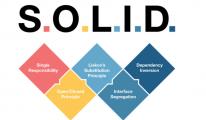
GRASP: как правильно распределять ответственность между объектами
I want to tell you about GRASP principles.

If you are already familiar with OOP, and especially with SOLID, some of the ideas behind GRASP may look familiar. You may even realize that you have been using some of them in your work for years without knowing their specific names.

Tags: 

How to Prove a Domain Is Yours: An Introduction to Domain Control Validation

I ran into this topic while building my own application — the kind that gets installed on a user's site and works in tandem with a remote server. The scheme looked trivial at first glance: on installation, the module sends its domain and email to the server, the server registers a new client, generates a key pair, and returns it. From there, the module talks to the server, signing its requests with its own secret.

Everything looked simple right up until I started asking myself some uncomfortable questions.

Tags: 

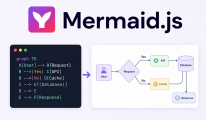
Mermaid.js: How to Create Diagrams for Documentation Using Text

Recently, I had to write documentation for a large project with a fairly complex structure.

Documentation itself doesn’t seem like such a difficult task anymore. With the help of AI, you can get a good understanding of even a large project relatively quickly. The important part is to clearly explain what you want to get as a result, plan the documentation structure, and provide the AI with enough context.

But there is another problem.

It’s not always convenient to describe a complex architecture using text alone.

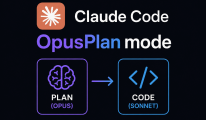
OpusPlan in Claude Code — A Mode That Saves Both Time and Tokens

Lately, I've been using OpusPlan quite a lot in Claude Code. In my opinion, it's one of the most convenient features when working with an agent on larger tasks.

The idea is simple: Opus is used for planning, while Sonnet handles the implementation once the plan is ready. And the switch between the two happens automatically.

I think this is a very logical approach.

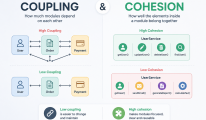
Coupling and Cohesion: Two Concepts Every Developer Should Understand

Lately, I've been spending quite a lot of time learning about design patterns and software architecture.

And the deeper I go, the more often I come across two concepts that seem to be behind almost everything: coupling and cohesion.

They may sound abstract at first, but they actually describe two very practical things:

How strongly are different parts of the system dependent on each other, and how well do the responsibilities inside a component belong together?

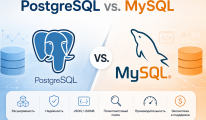
PostgreSQL After Many Years with MySQL: What Surprised M

For the last several years, MySQL has been my primary database.

PostgreSQL came up from time to time, but I never had a real reason to dive deeply into it.

That changed when I started working on a new project — an AI assistant. The project required PostgreSQL, JSONB, Full-Text Search, and, most importantly, pgvector for vector search.

After spending some time working with PostgreSQL more seriously, I realized that it is not just “another SQL database that is more or less like MySQL”.

Pages