How to Prove a Domain Is Yours: An Introduction to Domain Control Validation

I ran into this topic while building my own application — the kind that gets installed on a user's site and works in tandem with a remote server. The scheme looked trivial at first glance: on installation, the module sends its domain and email to the server, the server registers a new client, generates a key pair, and returns it. From there, the module talks to the server, signing its requests with its own secret.

Everything looked simple right up until I started asking myself some uncomfortable questions.

Tags: 

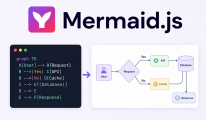
Mermaid.js: How to Create Diagrams for Documentation Using Text

Recently, I had to write documentation for a large project with a fairly complex structure.

Documentation itself doesn’t seem like such a difficult task anymore. With the help of AI, you can get a good understanding of even a large project relatively quickly. The important part is to clearly explain what you want to get as a result, plan the documentation structure, and provide the AI with enough context.

But there is another problem.

It’s not always convenient to describe a complex architecture using text alone.

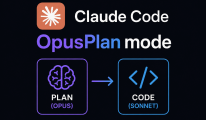
OpusPlan in Claude Code — A Mode That Saves Both Time and Tokens

Lately, I've been using OpusPlan quite a lot in Claude Code. In my opinion, it's one of the most convenient features when working with an agent on larger tasks.

The idea is simple: Opus is used for planning, while Sonnet handles the implementation once the plan is ready. And the switch between the two happens automatically.

I think this is a very logical approach.

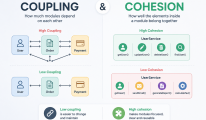
Coupling and Cohesion: Two Concepts Every Developer Should Understand

Lately, I've been spending quite a lot of time learning about design patterns and software architecture.

And the deeper I go, the more often I come across two concepts that seem to be behind almost everything: coupling and cohesion.

They may sound abstract at first, but they actually describe two very practical things:

How strongly are different parts of the system dependent on each other, and how well do the responsibilities inside a component belong together?

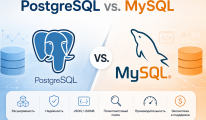
PostgreSQL After Many Years with MySQL: What Surprised M

For the last several years, MySQL has been my primary database.

PostgreSQL came up from time to time, but I never had a real reason to dive deeply into it.

That changed when I started working on a new project — an AI assistant. The project required PostgreSQL, JSONB, Full-Text Search, and, most importantly, pgvector for vector search.

After spending some time working with PostgreSQL more seriously, I realized that it is not just “another SQL database that is more or less like MySQL”.

Pages